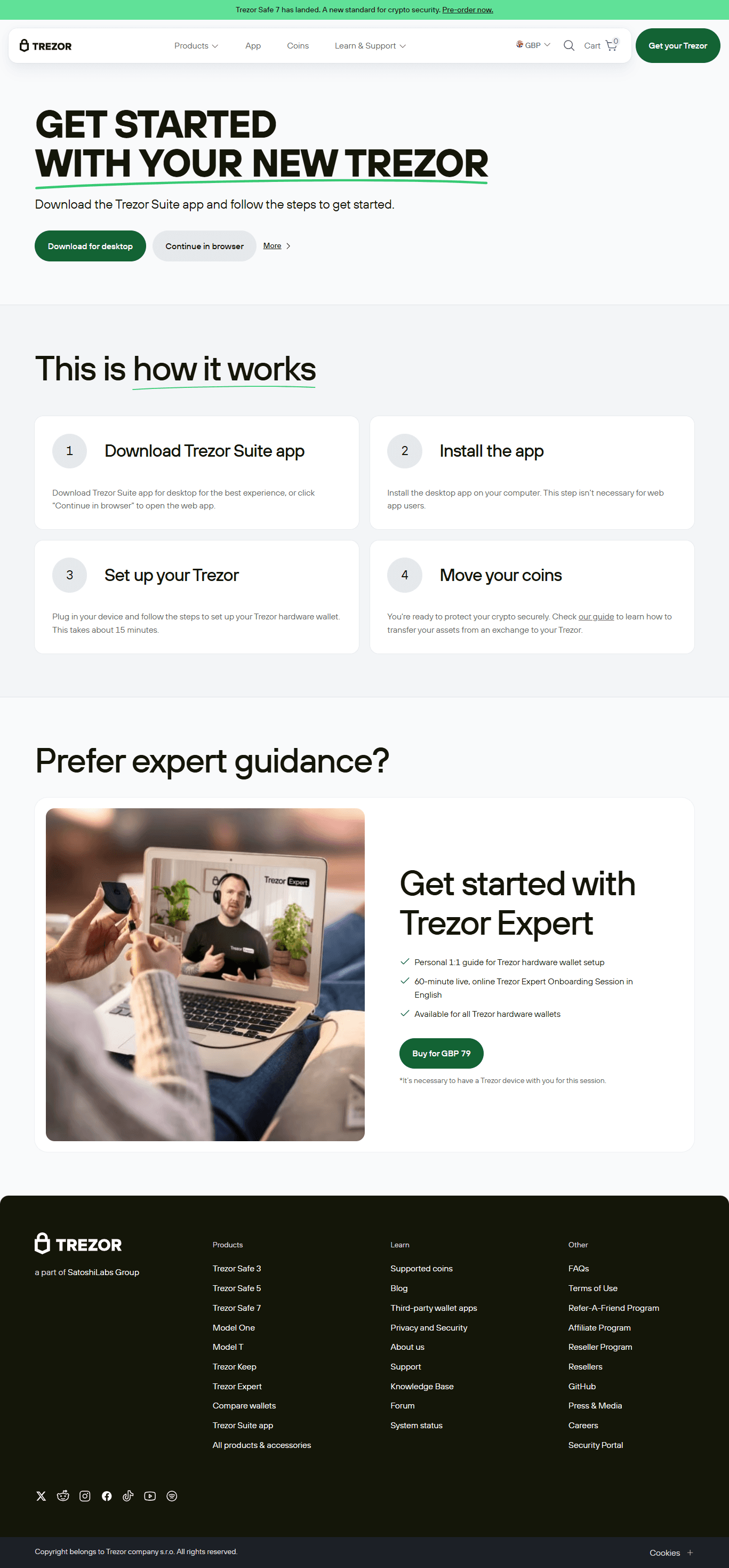
Trezor Suite: The Complete Guide to Managing Your Cryptocurrency Safely
With the rise of cryptocurrency, managing digital assets securely has become crucial. While online exchanges offer convenience, they are vulnerable to hacks and phishing attacks. Trezor Suite, the official software for Trezor hardware wallets, offers a secure, user-friendly, and all-in-one solution to manage cryptocurrencies safely. In this guide, we will cover everything about Trezor Suite—from setup and login to advanced features, security, and best practices.
What is Trezor Suite?
Trezor Suite is the official desktop and web application developed by SatoshiLabs to manage Trezor hardware wallets. It acts as the interface between your device and your cryptocurrency portfolio. Unlike software wallets, Trezor Suite ensures private keys never leave the hardware wallet, offering unparalleled security.
Key Advantages
Hardware-Level Security: All sensitive data remains on the Trezor device.
Intuitive User Interface: Easy to navigate for beginners and advanced users alike.
Portfolio Overview: Track all cryptocurrencies in one dashboard.
Transaction Management: Send, receive, and monitor transactions safely.
Exchange Integration: Trade cryptocurrencies directly without losing custody of assets.
Trezor Suite vs Other Wallets
Trezor Suite stands out from standard software wallets due to its combination of hardware and software security.
FeatureSoftware WalletTrezor SuitePrivate Key StorageOn device or cloudOffline on TrezorSecurityVulnerable to hacksHardware-level protectionMulti-Currency SupportVaries1000+ cryptocurrencies supportedTransaction SigningOn computerOn device (offline signing)Backup OptionsLimited12-24 word recovery seed
This combination ensures that even if your computer is compromised, your digital assets remain secure.
Setting Up Trezor Suite
Step 1: Download and Install
Visit the official Trezor website: trezor.io
Navigate to the Trezor Suite download section.
Select the version compatible with your operating system (Windows, macOS, Linux).
Follow the installation instructions to complete the setup.
Security Tip: Always download from the official website to avoid phishing scams.
Step 2: Connect Your Trezor Device
Use the original USB cable to connect your Trezor hardware wallet.
Launch Trezor Suite; it should detect your device automatically.
If it’s your first time, the app will guide you through device initialization, PIN setup, and recovery seed creation.
Logging into Trezor Suite
Trezor Suite does not use traditional login credentials. Instead, it relies on device authentication and a PIN code.
Steps to Log In
Connect your Trezor device to the computer.
Enter your PIN using the randomized matrix displayed on the device.
Once verified, Trezor Suite decrypts your wallet and displays your cryptocurrency portfolio.
Security Note: Your PIN and private keys are never stored on your computer. All sensitive operations are performed directly on the Trezor device.
Key Features of Trezor Suite
1. Portfolio Overview
Trezor Suite provides a comprehensive overview of your cryptocurrency assets:
View balances for each asset.
Monitor total portfolio value in your preferred fiat currency.
Track historical transactions and portfolio growth.
2. Sending and Receiving Cryptocurrency
Send crypto: Enter the recipient’s address, confirm the amount, and approve on your Trezor device.
Receive crypto: Generate unique addresses for each transaction to maintain privacy.
Supports Bitcoin, Ethereum, ERC-20 tokens, and other major cryptocurrencies.
3. Exchange Integration
Trezor Suite integrates with third-party exchange services:
Swap supported cryptocurrencies without leaving the application.
Retain custody of your assets while trading, reducing exchange risks.
Monitor exchange rates and trade history directly within the Suite.
4. Backup and Recovery
Check the status of your backup to ensure wallet security.
Restore wallets using your 12, 18, or 24-word recovery seed.
Add passphrase protection for enhanced security.
5. Firmware Updates
Keeping your Trezor device updated is essential:
Trezor Suite notifies users of new firmware versions.
Updates are securely installed with confirmation on the hardware device.
Ensures protection against new security threats.
Security Features
Dynamic PIN System
The login PIN is displayed as a randomized grid on the device.
Users click corresponding numbers on their computer screen, protecting against keyloggers.
Passphrase Protection
Users can create a passphrase in addition to their PIN.
Each passphrase generates a unique wallet, adding a security layer.
Protects assets in case the device is lost or stolen.
Offline Private Key Storage
Private keys never leave the Trezor hardware wallet.
All transaction signing occurs on the device, safeguarding your assets.
Anti-Phishing Measures
Trezor Suite verifies transaction addresses and URLs.
Reduces the risk of sending funds to malicious addresses.
Managing Multiple Accounts
Trezor Suite allows you to manage multiple cryptocurrency accounts:
Add and remove accounts easily.
Switch between wallets without logging out.
Track each account’s balance, transactions, and history individually.
This is ideal for users who trade multiple cryptocurrencies or maintain separate wallets for personal and professional use.
Troubleshooting Common Trezor Suite Issues
Device Not Recognized
Check the USB connection and cable.
Try a different USB port.
Ensure the device is powered on.
PIN or Login Problems
If you forget your PIN, use your recovery seed to reset the device.
Avoid repeated incorrect attempts to prevent temporary lockout.
Software Updates
If Suite fails to update, reinstall the latest version from the official website.
Ensure your operating system is compatible.
Transaction Failures
Verify network fees before sending crypto.
Confirm the recipient address is correct; Suite validates addresses before signing.
Best Practices
Keep your Trezor disconnected when not in use.
Avoid using public Wi-Fi for transactions.
Never share your recovery seed or passphrase.
Enable two-factor authentication for connected accounts.
Regularly update Trezor Suite and firmware.
Desktop vs Mobile Versions
Desktop Version: Full-featured; ideal for portfolio management, sending crypto, and firmware updates.
Mobile Version: Lightweight; best for monitoring balances and quick transactions.
Recommendation: Use desktop for critical tasks and mobile for monitoring.
Advantages of Trezor Suite
Centralized management of all digital assets.
Maximum security via hardware key storage.
Easy-to-use interface for all user levels.
Integration with exchanges for safe trading.
Continuous firmware and software updates for protection.
The Future of Trezor Suite
Trezor Suite continues to evolve to meet user needs:
Biometric authentication may be added for faster logins.
Multi-device verification could enable collaborative wallets.
Enhanced anti-phishing features integrated directly into the Suite.
Support for additional cryptocurrencies and blockchain networks.
Conclusion
Trezor Suite is more than just a wallet interface; it is a comprehensive cryptocurrency management system. Combining hardware-level security with a robust software platform, Trezor Suite enables users to send, receive, track, and trade cryptocurrencies safely.
Whether you are new to crypto or managing multiple accounts, Trezor Suite provides an intuitive, secure, and powerful interface to safeguard your digital assets. Following best practices and keeping your device updated ensures your investments remain safe in an increasingly digital financial world.